The lights dim in a community room somewhere in Chelsea. Folding chairs scrape. A projector hums to life. On the screen: a building that does not yet exist.
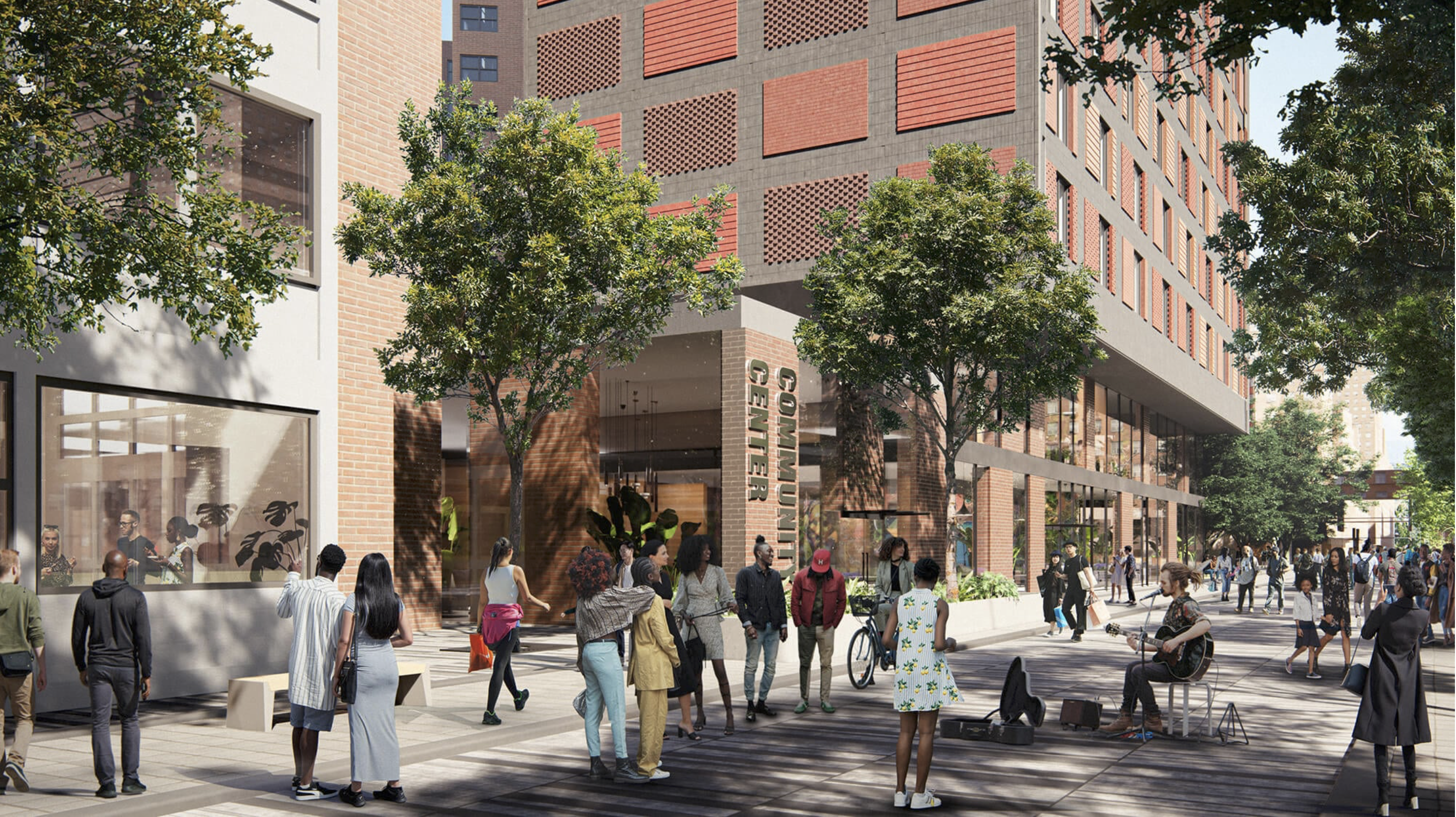
The development team stands to the side, remote in hand. They speak of opportunity. Of activation. Of housing delivered responsibly. The first slide appears. A tower rises from a sidewalk washed in amber light. At the street level, trees, fully mature, lean in approval. Cyclists pass without friction.
Around the room, board members squint. A few lean forward. Someone asks about height. The presenter clicks to another angle. The building steps back, deferential. The sky expands. The scale softens. It is hard to argue with a sunset.
This is how it happens now. We are given an atmosphere. A mood. A future already bathed in forgiveness.
New York has always built. That is not the problem. The problem is how we are asked to consent. Before excavation. Before scaffolding. Before shadow.
We are offered a glowing picture.
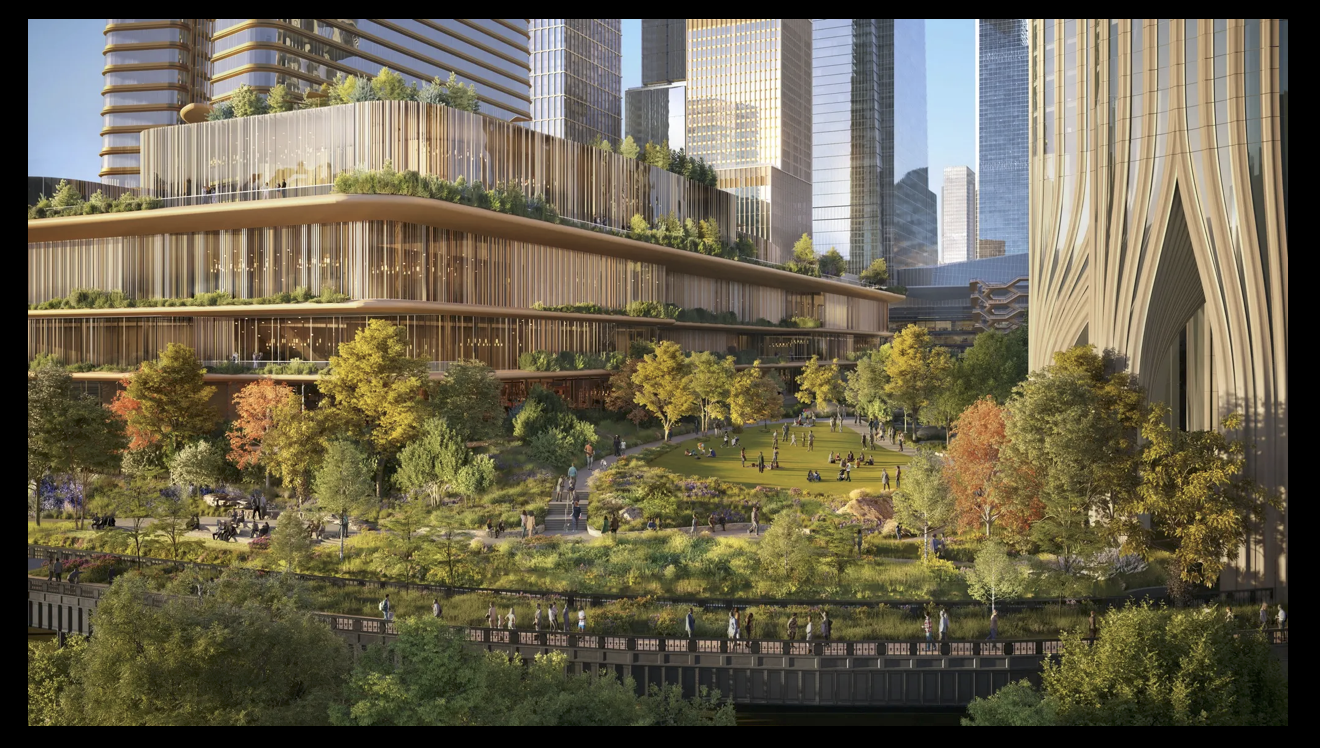
Architectural renderings are meant to seduce. The light is always golden. The trees are fully grown. The scale feels humane. A stroller glides across an immaculate plaza. A dog pauses mid-step, as if trained for civics, at the end of a leash whose owner would never fail to pick up after his pooch. The sky is rinsed clean of weather and consequence.
It is Voltaire who said “Illusion is the first of all pleasures”.
The rendering offers that pleasure freely. It asks nothing of us but admiration. It assures us that what is coming will be light, porous, neighborly. The sidewalks are wide. The façade steps back with courtesy. The tower, though tall, feels considerate.
Nothing is wrong in a rendering.
The proportions are wrong, but nothing is wrong with this picture.
Scale is usually the first casualty. A forty-story building hovers like a mid-rise. Bulk dissolves into atmosphere. Perspective performs its quiet manipulation. The vantage point is flattering, like a Tik-Tok filter. Existing buildings are blurred into passive submission. A tenement becomes texture. A public housing tower becomes part of the scenery.
The newcomer gleams.
The rendering is not the project. It is an interpretation of the project.
That distinction matters. Because interpretation is persuasion. It selects. It edits. It decides where the sun falls and where it does not.
In Chelsea, we have been persuaded one time too many. Each time, the image precedes the fact. A new development appears as a watercolor of harmony. Retail at the base, usually artisanal, mildly familiar, unthreatening. A plaza animated by ethnically balanced optimism.
When the building arrives, the shadows are longer than promised, the glass is less forgiving, the plaza is a wind tunnel.
But by then the argument is over. The rendering has done its work.
The peculiar violence of the rendering is that it gaslights in advance. If you raise a concern about height, you are shown how elegantly it tapers. If you question bulk, you are invited to admire the setbacks. If you worry about density, you are handed a sunlight study, carefully staged in June.
The rendering is designed to make every one of your objections feel unreasonable.
It has the same sheen as the smooth language of a cheating partner who insists that what you are seeing is not what you are seeing. Look at this image, it says. Look how open it is. Look how green. How elegant and serene. If the finished building feels overwhelming, perhaps the fault lies in your temperament. Perhaps you are nostalgic. Resistant. Afraid of change.
The image remains immaculate.
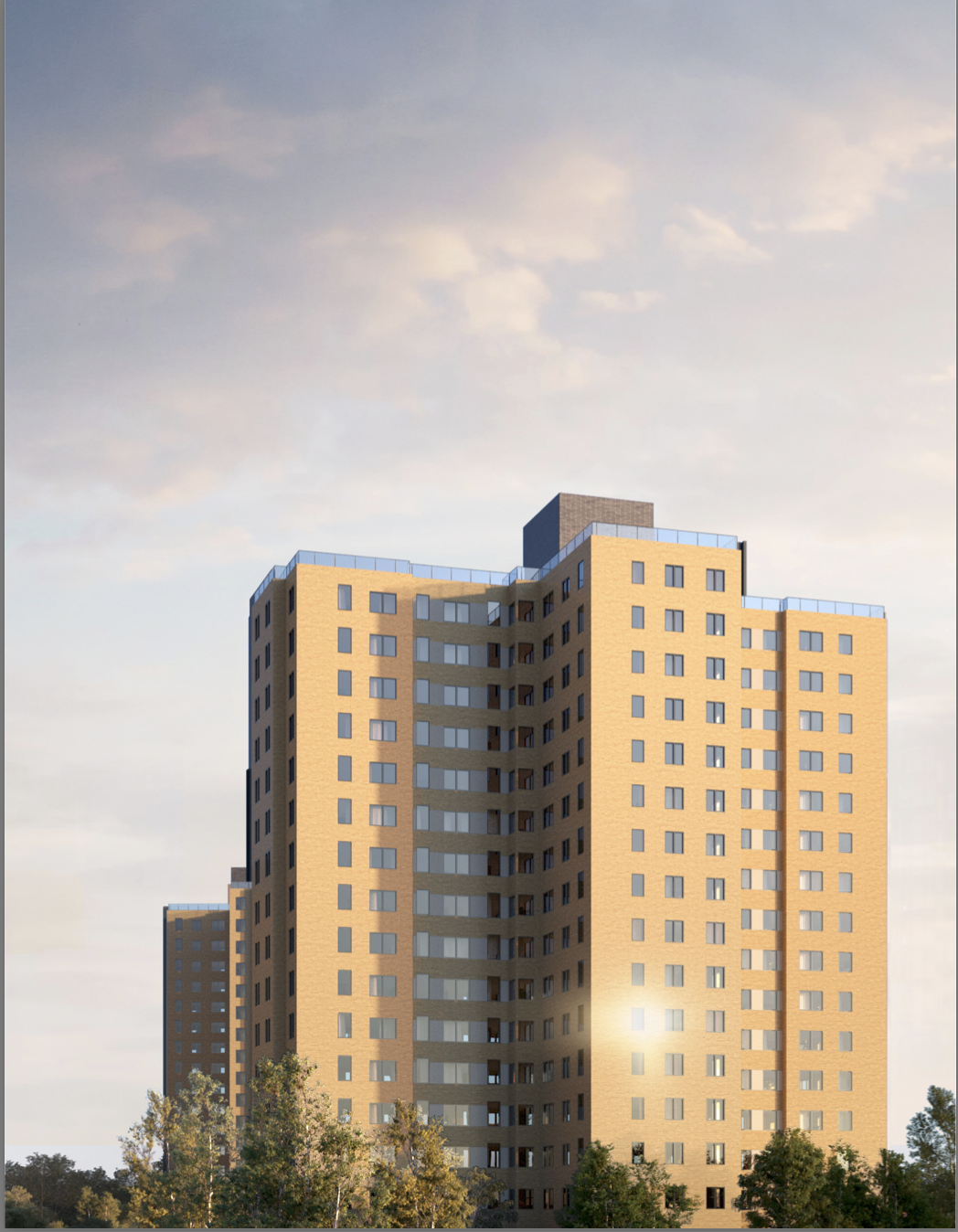
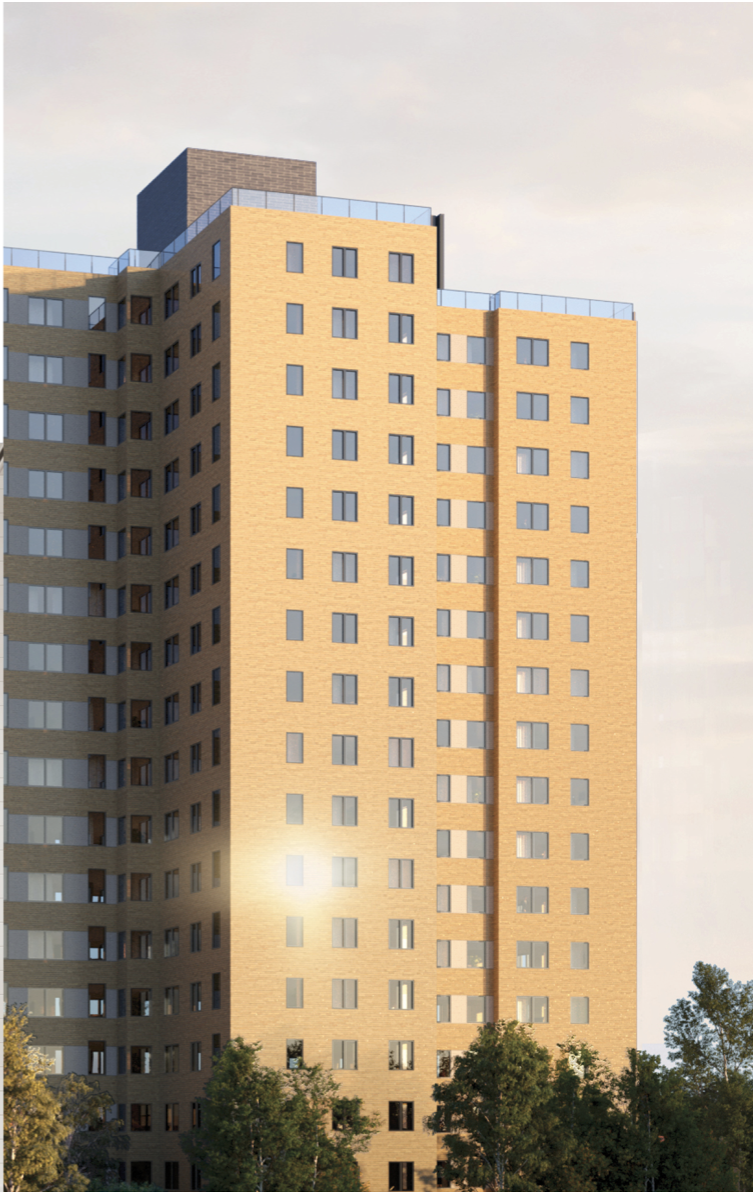
There is a particular cruelty when renderings are deployed in neighborhoods that have already absorbed decades of neglect. In the Bronx, when a public housing development was converted under the federal RAD/PACT program (Rental Assistance Demonstration, Permanent Affordability Commitment Together) the renderings promised a new era. Clean façades. Updated kitchens. Brand new stovetops. Safety restored through design. The triumph of urban renewal.
Then, less than two years after the conversion, came the gas explosion. A devastating accident that left one dead and 14 injured. 150 homes were evacuated in the middle of winter as a severe winter storm was approaching.
The cause of the gas leak and explosion is still under investigation. Was it a failure of upgrades, of maintenance, of oversight, of systems older than the presentation slides? It is difficult not to think about the distance between the frictionless image and the combustible reality.
A rendering cannot leak. It cannot corrode. It cannot explode. It floats in perpetual afternoon.
Why is it so seductive?
Partly because it borrows from painting. The light is curated. The sky has been forgiven. There is always a golden hour. Never February at four-thirty.
Partly because it borrows from advertising. We have been trained to equate resolution with honesty. If it looks expensive, it must be credible.
And partly because we want to believe.
The city is expensive, crowded, unrelenting. The idea that the next building might solve something, that it might deliver housing without harm, density without domination, affordability without a poison pill, is attractive. The rendering offers inevitability.
Beauty may introduce a proposal. But facts determine whether it serves the public good.
My role, and our collective responsibility, is to move beyond the pleasure of the image and examine what governs the outcome: height, bulk, shadow, environmental impact, soil contamination, infrastructure capacity, long-term affordability.
These are not photogenic questions.
Height cannot be airbrushed. Bulk does not soften because a balcony has been meticulously landscaped with trees so synthetic they never lose their leaves. Shadow studies do not care about golden hour. Sewer lines and electrical grids do not respond to mood lighting. Affordability is not guaranteed because of a young smiling couple on a roof deck.
Yet these are the forces that shape the lived city.
The problem is not that architects draw. The problem is that the drawing has replaced the argument.
We are no longer invited to debate zoning envelopes or infrastructure limits. We are asked instead: Do you like this? Isn’t it beautiful?
Beauty becomes a substitute for accountability.
When residents question overdevelopment, they are shown a rendering in which the mass dissolves into sky. When public housing tenants worry about displacement under RAD/PACT conversions, they are shown renovated interiors glowing with promise.
The image absorbs dissent.
It edits out construction noise, rerouted buses, and years of scaffolding. It edits out the shadow that will fall across the playground in March. It edits out the possibility that the “public” plaza will be privately managed, politely policed. It curates the fact that new buildings will be smilingly segregated.
It edits out the building that was there before.
In this way, the rendering performs a quiet erasure. The existing city, brick, tenant, memory, yields to a luminous and irresistible proposition.
New buildings are great. They are also necessary. Cities must evolve. Housing must be created. Infrastructure must be repaired.
But evolution requires scrutiny.
The rendering is an opening statement, not a verdict. It is a suggestion, not a settlement.
Perhaps we should look at these images the way we look at any other argument: with curiosity, with a critical and inquisitive mind. From where is this view drawn? What has been cropped? What season is depicted? Where are the delivery trucks? Where is the trash? Where is the tenant whose rent will rise? Where is the shadow at 9 a.m. in January?
Chelsea does not necessarily need fewer or more images. It needs clearer ones. Images that acknowledge winter. That admit uncertainty. That show scale without flattery.
Until then, the rendering will remain what it has become: the city’s illusion.
A luminous surface that offers pleasure first. And asks us not to look beyond it.
https://www.nyc.gov/site/nycha/about/pact/bostonroad-bostonsecor-middletown.page
https://www.nytimes.com/2026/01/24/nyregion/bronx-fire-explosion-evacuation.html